Am I a Good Candidate for a Hair Transplant?
Hair transplants can be an effective option for certain types of hair loss, but they are not the right solution for everyone.
Your hair transplant eligibility depends on several factors, like the type and pattern of your hair loss, the quality and availability of your donor hair, your overall health, and what you hope to achieve from the procedure.
At Advanced Hair & Skin Surgery, hair restoration is approached as an individualized medical treatment rather than a one-size-fits-all procedure. If you’ve ever wondered if you are a good candidate for a hair transplant and what to expect during the assessment process, keep reading.
What Makes Someone a Good Hair Transplant Candidate?
Every pattern of hair loss is different, which means candidacy needs to be assessed on an individual basis. There is no single factor that determines whether someone is a good candidate for a hair transplant. Hair transplant eligibility depends on a few key factors, listed below.
You Have Enough Healthy Donor Hair
One of the most important factors is having an adequate supply of healthy donor hair. During a hair transplant, follicles are taken from areas of the scalp where hair is growing more consistently—typically the back and sides of the head—and transplanted into areas experiencing thinning or hair loss. Because a hair transplant redistributes your existing hair rather than creating new follicles, the density and quality of the donor area help determine what may be achievable. Someone with limited donor hair may have fewer options or may not be an appropriate candidate for surgery. Hair characteristics such as texture and curl can also influence the appearance of the final result.
Your Hair Loss Pattern Is Suitable for Transplantation
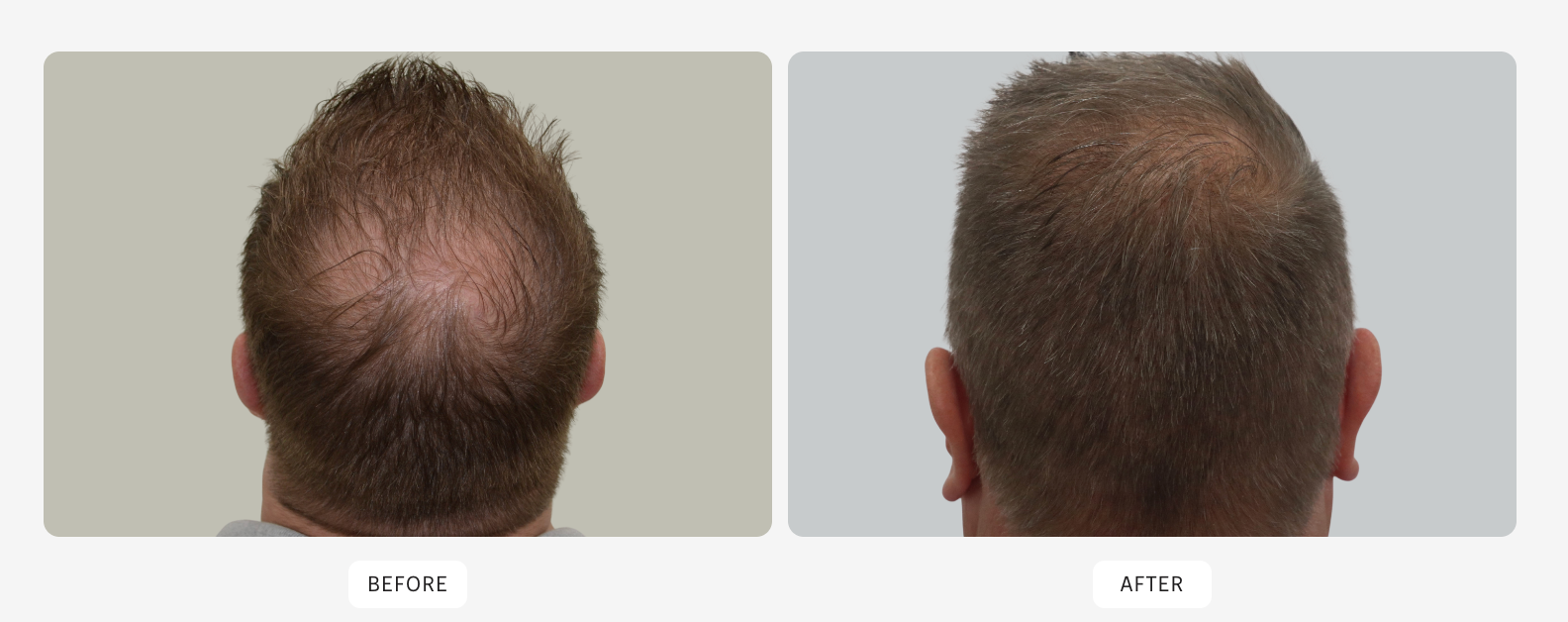
The pattern and progression of your hair loss is also important to consider. Dr. Elliott will look at where you are losing hair, how extensive the thinning is, and whether it appears to be stable or still progressing. This matters because a hair transplant needs to be planned with the future in mind. If surrounding, non-transplanted hair continues to thin over time, it can affect how the overall result looks and whether additional treatment may be needed later.
When the underlying cause of hair loss is androgenetic alopecia (AGA), also known as genetic or pattern hair loss, it’s important to understand that a hair transplant does not treat the underlying condition itself. The transplant redistributes existing hair to areas of loss, but AGA can continue to affect the non-transplanted hair over time. This is why medical therapy may be recommended as part of a long-term hair restoration plan to help manage ongoing hair loss and preserve existing hair.
During your consultation, Dr. Elliott will assess your scalp and hair loss pattern to determine whether transplantation is an appropriate option and how it may fit into a longer-term hair restoration plan. It is required to book a consultation before a hair transplant procedure so these individual factors can be evaluated.
BOOK A CONSULTATION HERE
You Have Realistic Expectations About the Results and Recovery
It’s important to understand what the procedure can (and cannot) do. Realistic expectations are an important part of determining candidacy. The goal isn’t necessarily to recreate the exact hair density or hairline you had years ago. The amount of coverage that can be achieved is influenced by factors such as the extent of your hair loss and the amount of donor hair available.
It’s also important to understand that recovery and hair growth take time. Dr. Elliott recommends having multiple days after surgery to recover, and temporary redness, scabbing, or swelling can occur during the healing period. Transplanted hairs typically shed before new growth begins, with new growth starting around three to four months after the procedure and continuing to develop over time.
A consultation is your opportunity to discuss the areas you would most like to address, what recovery may look like for you, and what can realistically be achieved based on your individual hair characteristics. This helps create a treatment plan—and timeline—that you feel informed and comfortable moving forward with.
You’re Medically Suitable for the Procedure
A hair transplant is a surgical procedure, so your overall health and medical history also need to be considered.
If you seek treatment, your physician may review medical conditions, previous procedures, medications, smoking history, and other factors that could affect surgery or healing. This is why determining whether you are a good candidate for a hair transplant requires more than looking at the amount of hair you have lost.
At Advanced Hair & Skin Surgery, the consultation includes a discussion of your health, hair loss, desired results, and a scalp assessment before a personalized treatment plan is recommended. It’s also your chance to ask any questions and get clear on the process.
%20(1).png)
Who May Not Be a Good Candidate for a Hair Transplant?
A hair transplant may not be the right option for everyone, but that does not mean there are no other options. People with limited donor hair, diffuse or unpredictable hair loss, certain scalp conditions, or medical factors that could affect surgery or healing may not be ideal candidates.
In some cases, expectations around density or coverage may also exceed what the available donor hair can realistically achieve. A proper assessment is important before deciding whether surgery is appropriate and realistic for your personal goals.
At Advanced Hair & Skin Surgery, candidacy is determined through an individualized assessment with Dr. Elliott, rather than a single checklist. If you’re curious about your options, contact the clinic.
What If You’re Not Ready for a Hair Transplant?
If you’re not ready for a hair transplant—or if surgery is not the best option for you right now—it’s okay! There may be other approaches worth exploring first with Dr. Elliott. Depending on your type of hair loss, goals, and medical history, options such as PRP or other physician-guided hair restoration treatments may be considered as part of a broader plan.
At Advanced Hair & Skin Surgery, the goal is to recommend an approach that fits your individual needs rather than rushing into surgery before you are comfortable or ready.
Considering a Hair Transplant? Start With a Consultation
If you’re considering a hair transplant procedure in Canada, a consultation at Advance Hair & Skin Surgery is the best place to start. This appointment gives Dr. Elliott an opportunity to assess your hair loss, examine the quality and availability of your donor hair, review your medical history, and discuss what you would like to achieve. From there, he can determine whether a hair transplant may be appropriate and talk you through a personalized approach based on your needs.
The consultation is also your opportunity to ask any questions or get more clear on any hesitations. Hair restoration is a very personal decision, and you should leave the appointment with a clear understanding of your options, what to expect, and enough information to feel confident and comfortable with whatever you decide. Reach out to the clinic if you have any hesitations or would like to book your next visit.
We’re located at 501 Bethel Dr, Sherwood Park, Alberta, Canada. You can call us at 825-450-3394 or visit us online and we’d be happy to help.
BOOK A CONSULTATION HERE
FAQs
Natural. Undetectable. Long lasting.
Follow-up appointments allow Dr. Elliott to monitor healing and track progress with photographs and clinical examinations.
These visits also provide an opportunity to ask questions and discuss any concerns during recovery.
Local anesthesia and comfort measures are used throughout the procedure. Following surgery, many patients report minimal discomfort, although recovery experiences vary between individuals.
Patients are provided with post-operative instructions and contact information should questions arise during recovery.
Not always.
Depending on the procedure and your hairstyle, it may be possible to work through existing hair rather than shaving the entire scalp. Dr. Elliott can discuss the approach best suited to your goals.