Hair Transplant Correction
Restore what should have been done right the first time.
Hair transplant correction is a specialized surgical procedure to repair or improve the results of a previous hair transplant.
Earlier generation techniques, or improperly performed modern procedures, can result in visible or unnatural outcomes such as plug-like grafts, incorrect hair direction, uneven density, or noticeable scarring.
Corrective surgery is often more complex than a primary transplant. It requires careful donor management, aesthetic redesign, and long-term planning to preserve remaining graft supply while improving appearance.
At Advanced Hair & Skin Surgery, corrective procedures focus on restoring natural hairline architecture, improving density balance, and rebuilding patient confidence using refined modern techniques.
Corrective hair transplant surgery may involve removal, redistribution, or refinement of previously placed grafts.
Treatment planning often includes softening hard or plug-like hairlines, improving density, transitions, camouflaging scars, and protecting limited donor reserves.
In some cases, viable grafts from prior procedures can be carefully repositioned. In others, staged treatments are required to gradually restore natural appearance without overharvesting remaining donor hair.
The objective is not simply to add more hair, it is to create harmony, realism, and long-term sustainability. Every corrective case is unique and requires individualized surgical design.
Patients with outdated “plug” transplants often benefit from refined follicular unit techniques that soften and modernize the hairline.
Corrective cases require thorough evaluation and honest discussion.
Your consultation includes review of previous procedures, donor area analysis, scar assessment, hairline design evaluation, and long-term restoration planning.
Not every case can be corrected fully in one stage. Realistic expectations and thoughtful planning are essential. Our role is to provide clarity and a responsible path forward.
Corrective procedures are performed under local anesthesia, with optional light sedation for comfort.
Procedure length depends on complexity and graft requirements. Meticulous placement and refined hairline redesign are central to achieving natural, undetectable results.
Recovery is similar to standard hair transplant surgery. Mild redness or temporary swelling may occur.
Transplanted hairs typically shed within the first few weeks, followed by new growth beginning around three to four months. Progressive refinement develops over nine to 12 months.
Follow up appointments allow careful monitoring of healing and growth. Supportive therapies such as PRP may be recommended to enhance outcomes.
Advanced treatment with thoughtful care
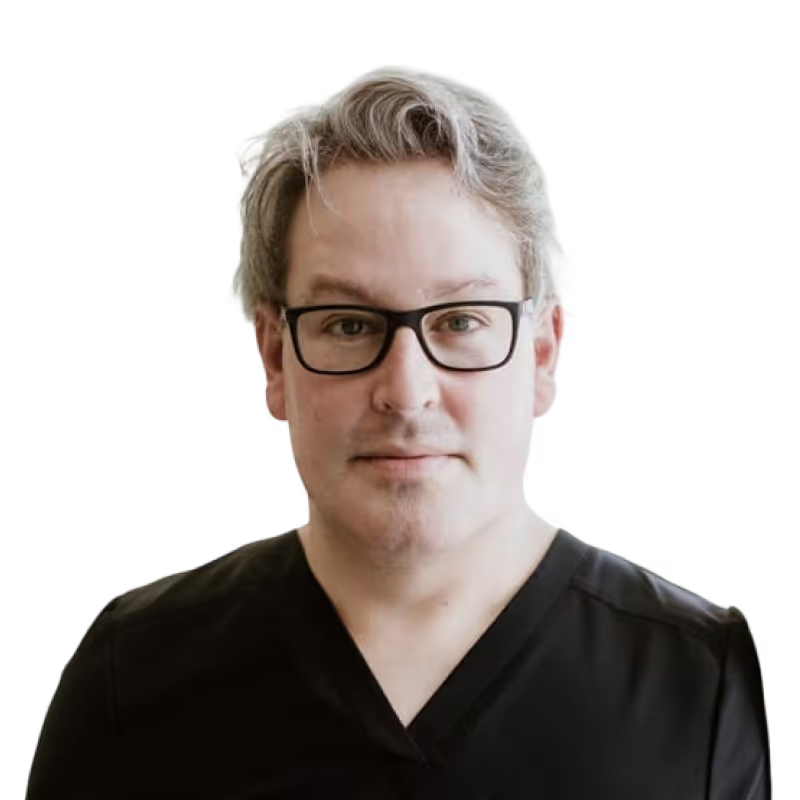
Led by Dr. Vance Elliott, our clinic brings more than 30 years of focused hair restoration expertise, including complex corrective cases. Patients choose our clinic for thoughtful hairline redesign, careful donor preservation strategies, honest candidacy evaluation, and surgical care grounded in long-term planning.
Corrective procedures represent an investment in restoring confidence. Flexible payment options are available through Beautifi for eligible treatments.
Corrective hair transplant surgery demands a surgeon who understands the evolution of hair transplantation and the precision of modern techniques. Your care remains in expert care from consultation through final growth results, guided by experienced medical professionals focused on precision and patient safety.
Natural. Undetectable. Long lasting.
Not all cases can be fully reversed, but significant improvement is often possible with proper planning.
Some corrective cases require staged treatments to preserve donor hair and achieve optimal results.
Yes. Modern follicular unit techniques can soften and redesign outdated plug-style hairlines.
Donor supply must be carefully evaluated and preserved. This is a key part of corrective planning.
New growth typically begins within three to four months, with full refinement over nine to 12 months.
What Can Hair Transplants Improve?
Hair transplant correction may improve ‘pluggy’ hairlines, unnatural graft direction, visible transplant scarring, uneven density, overharvested donor areas, and dissatisfaction with prior procedures.
You deserve results that look natural – and feel right.
If your previous hair transplant left you disappointed, you’re not alone.
Let’s create a thoughtful plan to restore what should have been achieved from the beginning.
Book your corrective consultation today.